
An LLC, or limited liability company, is a business structure formed under state law. Its owners are called members. Before choosing one, consider your business risks, owners, costs and tax requirements.
What does an LLC provide?
The SBA explains that an LLC generally protects its owners from personal liability. That protection has limits. Ask an attorney how it applies to your activities and obligations before relying on it.
A sole proprietorship does not create a separate business entity. If you are comparing it with an LLC, weigh personal liability against the filing and ongoing work an LLC requires. A trade name alone does not make that choice for you.
Who can own an LLC?
Many states allow one-member and multiple-member LLCs. Ownership and permitted activities depend on state rules. Some businesses, including banks and insurance companies, generally cannot use an LLC. The IRS overview explains these distinctions.
Does an LLC reduce your taxes?
An LLC does not automatically have one federal tax treatment. By default, a domestic LLC with two or more members is generally treated as a partnership for federal income tax. A one-member LLC is generally treated as part of its owner’s tax return. Elections can change that treatment, and employment and certain excise taxes have separate rules.
Discuss the expected income, owners and tax elections with a qualified tax adviser. Forming an LLC alone does not establish a tax saving.
Decide before choosing a state
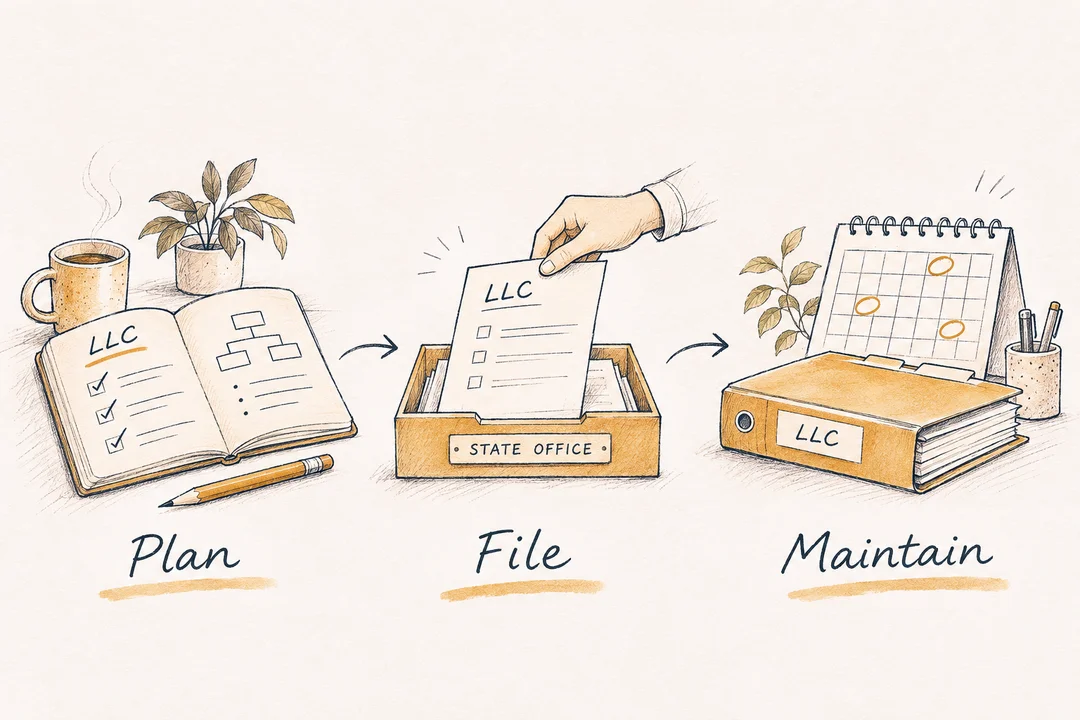
Write down who will own the business, what it will do and where it will operate. Compare the filing and recurring costs with the help and protection you need.
If you have investors, regulated work or unusual ownership terms, resolve those questions with an adviser first. Once you choose an LLC, use the state-selection guide and return to your formation checklist.
Sources
Sources checked