

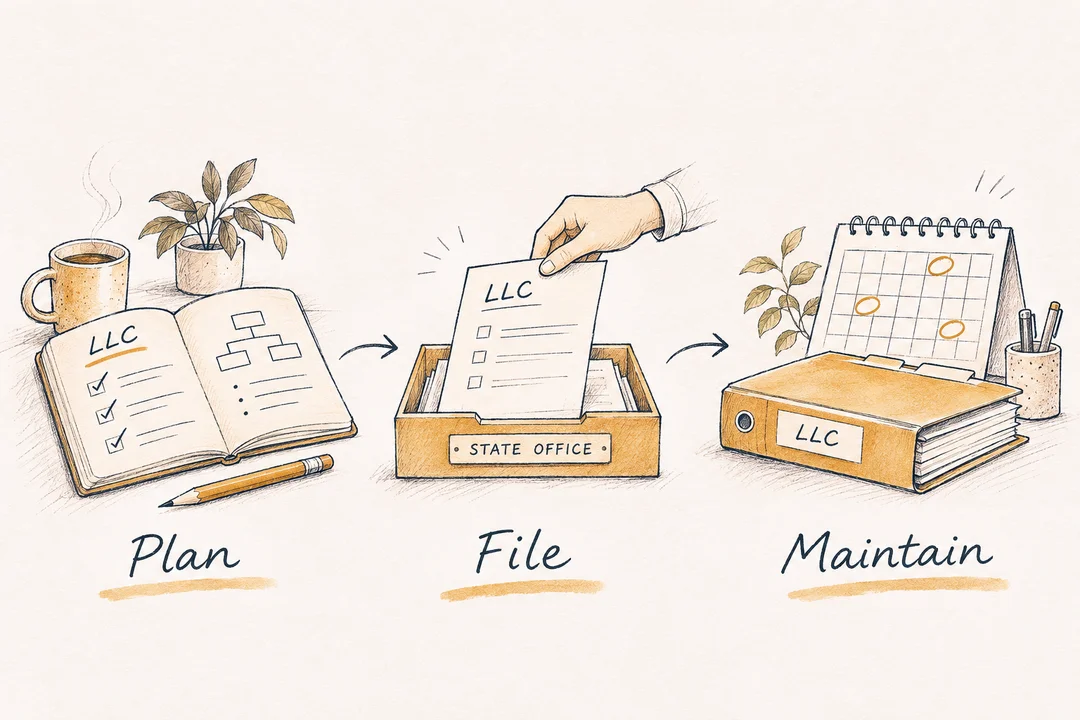
To form an LLC, choose the state and name, arrange the registered agent, and file the formation document. Then prepare the operating agreement and complete the tax, banking and reporting steps your business needs. Track each step as you go.
Use the interactive checklist or downloadable PDF to track the work. Save the state’s acceptance separately as proof that the filing was approved.
Make the decisions first
List what the business will do, where it will operate, who owns it and who will run it. Use those facts to choose the business structure and formation state. Review the state-selection guide before treating a low filing fee as the deciding factor.
Then check the proposed name against the filing office’s requirements. A preliminary search does not guarantee acceptance and does not settle every trademark issue. If a name reservation is required or useful, treat it as its own step rather than assuming a search reserves the name.
Plan the registered office and agent arrangement under the state’s rules. Confirm permission and any acceptance documentation before naming another person or company. Some states use different terminology or distinguish a registered office from a separately named agent.
Prepare the right formation document
Open the state guide and follow its links to the current official form or portal. The document may be called Articles of Organization, a Certificate of Organization or a Certificate of Formation.
Gather the details the office actually asks for. Common topics include the LLC name, addresses, agent or office, organizer information and management arrangements. The required fields and signing rules vary. Consider which information will become part of the public record before submitting it.
Some forms let you choose a later effective date. Select that option only if you want the LLC to legally start later; it is different from paying for faster review. Follow the date limits shown by the state.
Submit, then confirm the outcome
Check the state fee and the price of any optional service before paying. Keep the submission receipt and reference number. Watch the filing account or contact channel for approval, rejection or a request for correction.
Save the accepted document when it is available. Record the entity ID, effective date and where the official record can be found. If a filing is rejected, read the agency’s correction instructions before creating another submission; a second payment can complicate matters.
Our timeline guide explains the difference between preparation, agency review and being ready to operate.
Set up company records, banking and tax accounts
After formation, finalize the internal operating agreement and organize the company’s records. Address ownership, contributions, decision-making and changes in membership before those questions become a dispute. See the operating agreement guide.
Check whether the LLC needs an EIN and use the IRS’s direct application guidance. Prepare the documents your bank requests, and establish a consistent way to record business transactions.
Review licenses and tax registrations for the business’s activity and location. Forming the entity does not automatically authorize every regulated service or complete every tax-account application. The SBA launch guide treats registration, tax IDs, licenses and banking as separate parts of the setup.
Put recurring work on a calendar
Some states require an initial report, publication or another follow-up soon after formation. Annual and biennial requirements can then follow a fixed date, an anniversary or the company’s fiscal year. Use the actual state rule and company record for the reminder.
Keep agent and address information current and retain evidence of each filing. Check the current FinCEN guidance and any separate state ownership-reporting requirements rather than relying on an old checklist.
Schedule a regular review of company records and upcoming filings. Use the after-formation guide to organize that work.
