

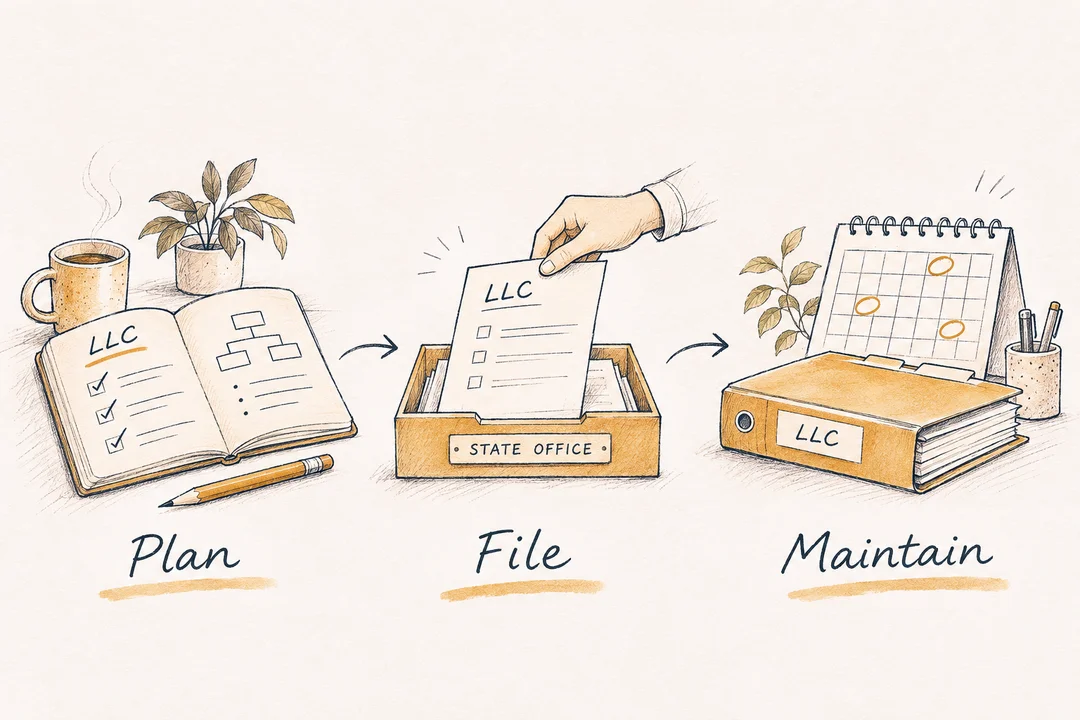
After approval, save the filed document, prepare the operating agreement and apply for an EIN if needed. Set up banking and any required licenses or tax accounts. Add the first reporting deadlines to your calendar.
Start with the accepted document and the official business record. Confirm the LLC’s legal name, entity ID, effective date and contact details. Store copies where the people handling filings and company records can find them.
Organize the company records
Keep the formation document, filing receipts, operating agreement and later amendments together. Record who can sign for the company, how important decisions are approved, and where notices will be delivered.
The operating agreement guide covers ownership, voting and management decisions. Update the agreement when an owner joins or leaves or when management changes.
Review EIN and tax registration requirements
An Employer Identification Number (EIN) is free from the IRS. Form the LLC with the state first. The online application requires a US or US-territory principal place of business and the responsible party’s SSN or ITIN. If your business is based abroad, follow the phone, fax or mail instructions in the IRS EIN guide.
For federal income tax purposes, an LLC can be taxed through its owner, as a partnership or as a corporation. The default depends on the number of owners; an election can change the treatment. Use the IRS LLC overview to identify the starting category, then get tax advice if you plan to change it.
Also check state tax accounts that may apply to sales, payroll or other activities. Entity formation does not automatically register the company for every tax.
Set up banking and bookkeeping
Ask the bank which documents and ownership information it needs. The accepted formation document, an EIN when required, identification and evidence of signing authority may be part of its requirements.
Keep business transactions separate from personal spending. Save receipts and other supporting documents, and reconcile the accounts regularly. Decide who keeps the books and who can authorize payments.
The SBA’s launch guidance includes banking among the tasks to complete after registration.
Check licenses and initial follow-up filings
Requirements depend on the activity and location. Review professional or industry licenses, local permissions, tax registrations and any initial report or publication required by the formation state.
New York, for example, has a newspaper publication and certificate process described in its formation guidance. Open your state guide for the follow-up filings that apply there.
Use the current ownership-reporting rules
US-created companies are exempt from federal beneficial ownership information (BOI) reporting under FinCEN’s final rule effective August 14, 2026. A company formed under a foreign country’s law and registered in the US may still need to report unless an exemption applies. See FinCEN’s current BOI guidance.
The owner’s citizenship does not change the country where the company was formed. State disclosure rules can still apply. New York’s beneficial ownership FAQ, for example, describes separate requirements for foreign-country LLCs authorized there.
Maintain a recurring calendar
Use the company’s actual report cycle, fiscal year or anniversary date to schedule filings. Keep the agent or office arrangement, addresses and official contact details current. Save filing confirmations and verify that changes appear in the relevant record.
The state comparison table summarizes recurring filing items, but the state guide and official instructions contain the qualifications. A no-fee report still may need to be filed, and a report fee does not represent every tax the business may owe.
Track these tasks with the interactive checklist and PDF. If the business changes or closes, complete the required update, withdrawal or dissolution filings. Leaving the LLC unused does not end its obligations.
